

News & Insights
Photo courtesy of: Greg Land
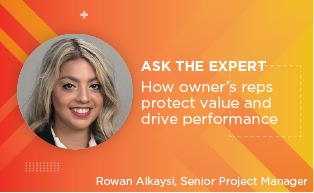
Today’s ballparks, arenas and stadiums are no longer simply places to host games and events; they also need to generate revenue, deliver exceptional fan experiences, support operations teams, and perform for decades. In this issue’s Ask the Expert column, we sat down with Sr. Project Manager Rowan Alkaysi to discuss what truly defines success for a venue.
B&D: What separates a successful sports venue project from one that is simply delivered on time and on budget?
Rowan Alkaysi: Delivering on time and on budget is baseline. If you can’t do that, you shouldn’t be in this business. What elevates the pros from the amateurs is the ability to deliver on the next set of goals, like creating new revenue opportunities, improving the fan experience, making the venue easier and more efficient to operate, and giving owners the flexibility to adapt as their needs evolve. Every project has a different definition of success, but when I’m on a project, I never lose sight of the bigger picture. Hitting the schedule and budget matters, but the real measure of success is whether the project achieves the business and operational outcomes it was designed to deliver.
B&D: What role does the owner’s representative play in aligning the different priorities of the many stakeholders in a venue project?
RA: It’s the owner’s rep’s job to make sure every decision is being made with the owner’s goals in mind, because every stakeholder is looking at the project through their own lens. The design team is focused on the vision. The contractor is focused on constructability. The operations team is thinking about how the venue will function day to day. My role is to help the owner navigate those competing priorities, understand the tradeoffs, and make informed decisions that keep the project moving toward the outcomes they’re trying to achieve.
B&D: Has the role of the owner’s representative changed in the course of your career?
RA: Sports venues have become a lot more complicated, and the owner’s rep role has evolved right along with them. It wasn’t too long ago that the focus was largely on delivering the project. Today, you’re helping owners think through everything from technology and premium experiences to sponsorships, mixed-use development, and long-term revenue opportunities. The job isn’t just about getting the building open anymore. It’s about helping owners make decisions that will impact how that venue performs for years, or even decades, after opening day.
B&D: If you could give venue owners one piece of advice before embarking on a major renovation or new facility project, what would it be?
RA: Operations, operations, operations. The most expensive mistakes on venue projects are rarely construction–related. They are usually the result of decisions made without input from the people who will actually operate the building for the next decade and beyond. How will the venue generate revenue? How will it operate efficiently? How will maintenance teams support critical systems during a sold-out event? The more clarity you create at the front end, the less regret you’ll experience at the back end.
Thank you again to Rowan for her participation in Ask the Expert. If you have a topic you’d like us to cover in a future issue, submit it here.


