

News & Insights
Photo courtesy of: Greg Land
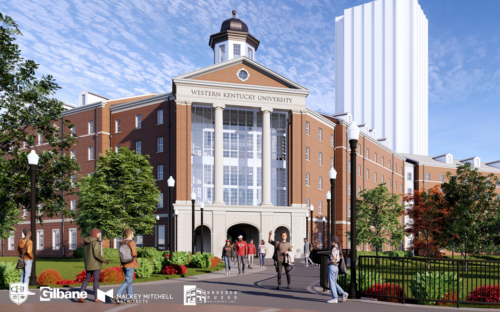
Photo credit: Western Kentucky University
This is the second installment in a three-part series on Elevate WKU. Part 1 explored how Western Kentucky University turned an urgent housing challenge into an opportunity to rethink the entire residential system. This installment turns from problem definition to structure: why WKU selected a systemwide student housing P3, and how the model aligns capital, delivery, operations, accountability, and university control.
Elevate WKU was recently shortlisted for Best Financial Structure at the 2026 P3 Awards, among the industry’s most recognized programs celebrating excellence and innovation in public-private partnerships across North America.
Public-private partnership is one of those phrases that can become a shortcut. Say “P3,” and people may picture a financing device, a private developer, or a way to move a project off a university’s balance sheet. Each may be part of the story. None explains why a partnership will create value.
In my experience, “Should we use a P3?” is usually the wrong opening question. The better question is: What outcomes can we not achieve under the current model—and what combination of capital, expertise, risk allocation, and control will help us achieve them?
Western Kentucky University did not need a label. It needed a housing system that could solve several problems at once.
Because WKU had defined the problem as one of capital, governance, operations, accountability, affordability, and student experience, the question became what structure could hold those requirements together.
A single new building could have replaced lost beds. It could not, by itself, modernize WKU’s housing portfolio, create a stronger maintenance model, clarify accountability, or preserve capital capacity for other university priorities.
That distinction led WKU toward a systemwide solution.
The result was a phased program that begins with a new 1,000-bed first-year project in 2028 and is intended to replace or renovate the full housing portfolio by 2030.
Elevate WKU was designed to accomplish five interconnected goals:
These goals are what made the P3 relevant. The partnership was not the strategy. It was the structure chosen to carry out the strategy.
Elevate WKU is a $350 million public-private partnership organized through a 50-year ground lease. Collegiate Housing Foundation, a 501(c)(3) nonprofit, serves as the housing owner and borrower. Gilbane Development Company serves as the development partner. Inwood Management is responsible for day-to-day physical operations and maintenance. WKU retains its Residence Life function and works with the operating partner through a shared-governance structure.
In plain language, the model has four layers.
The nonprofit ownership structure supports bond financing backed by housing revenues and allows WKU to advance a large housing reinvestment program while preserving direct debt capacity for academic and institutional priorities.
Gilbane brings the development, design-coordination, and implementation capacity required to move the capital program from concept through construction. The first new project is an approximately 1,000-bed residence hall and dining facility scheduled to open in fall 2028.
Inwood is responsible for the physical performance of the housing portfolio: building systems, maintenance standards, and service responsiveness.
WKU retains the functions that define the student residential experience, including Residence Life, programming, and rate-setting authority. The initial transaction was structured without increasing student housing rates.
Every layer has a job. The value comes from the way those layers reinforce one another.
University leaders often worry that involving a private partner means “giving up control.” That concern is legitimate, but the usual framing is too simple. Control is not measured by how many tasks the university performs itself. It is measured by whether the institution can protect the outcomes that matter most.
For WKU, those outcomes include affordability, campus culture, student support, and the quality of the residential experience. That is why resident assistants, hall directors, student programming, and Residence Life remain university functions.
Facility operations require a different set of capabilities: preventive maintenance, building-system expertise, work-order management, lifecycle planning, and consistent performance reporting. Assigning those responsibilities to a specialized operator does not surrender mission control.
It sharpens responsibility.
The crucial work is at the seam. Residence Life and facility operations must function as one student-facing system, even when different organizations perform them. Shared governance makes that coordination explicit.
Opening day is easy to celebrate. Year 15 is where the operating model proves itself.
By then, the renderings are long forgotten. Building systems are aging. Preventive maintenance competes with other priorities. A slow work order can become a student-satisfaction problem; repeated service failures can become an enrollment or reputational problem.
This is why the management agreement may matter as much as the development agreement.
The Elevate WKU framework establishes joint oversight and defined performance expectations for maintenance, student satisfaction, and service responsiveness. It gives the university and its operating partner a recurring forum to review results, solve problems, and intervene before a small issue becomes a systemic one.
Capital can replace buildings but only an operating model can protect their performance.
Elevate WKU should not become a template that other institutions copy line by line.
Every university enters the conversation with a different balance sheet, housing market, legal environment, portfolio condition, operating capacity, and appetite for long-term contractual commitments. The right answer may be a P3, traditional debt, self-development, a hybrid structure, or no new project at all.
The transferable lesson is the order of operations:
At WKU, the P3 is strategically coherent because every component solves a defined problem. Capital supports the plan. Development capacity advances it. Operations sustain it. Governance keeps it aligned with the university’s mission. Three letters do not make a partnership successful. Design does.
In Part 3, I turn from WKU’s structure to the broader lessons for university presidents, CFOs, boards, and campus leaders deciding how to respond when aging infrastructure, capital constraints, and student expectations collide.
Julian Sagastume is a Senior Associate in Brailsford & Dunlavey’s Chicago office, where he advises colleges, universities, healthcare systems, and public institutions on public-private partnerships, strategic capital planning, and infrastructure development. Julian served as the lead advisor to Western Kentucky University throughout the development of Elevate WKU. He works with executive leaders to structure and implement complex projects that advance institutional priorities. His experience spans education, housing, healthcare, energy, and infrastructure development initiatives across the United States.


